


U.S. President Trump to Head First Peace Council Meeting in Washington
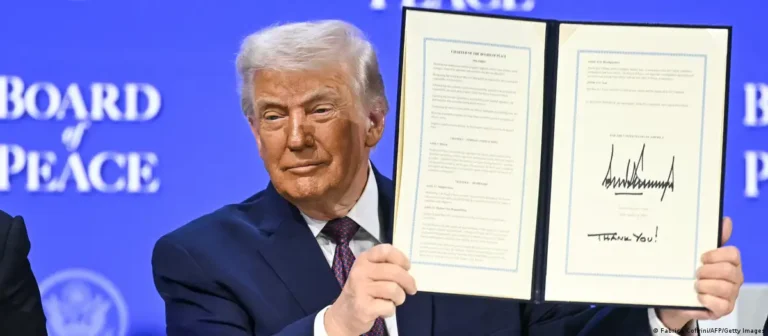
(FILE) Trump signed the founding charter of the Peace Board on January 22 in Davos, Switzerland. Photo: Getty Images.
February 18, 2026 Hour: 11:35 pm
🔗 Comparte este artículo
U.S. President Donald Trump will preside over the first meeting of the Peace Council in Washington, joined by over 20 delegations, to announce a Gaza reconstruction fund and plans for an international military deployment.
U.S. President Donald Trump, will preside over the first formal meeting of the Peace Council in Washington on February 19, with the confirmed attendance of more than 20 delegations and leaders, including Argentine President Javier Milei.
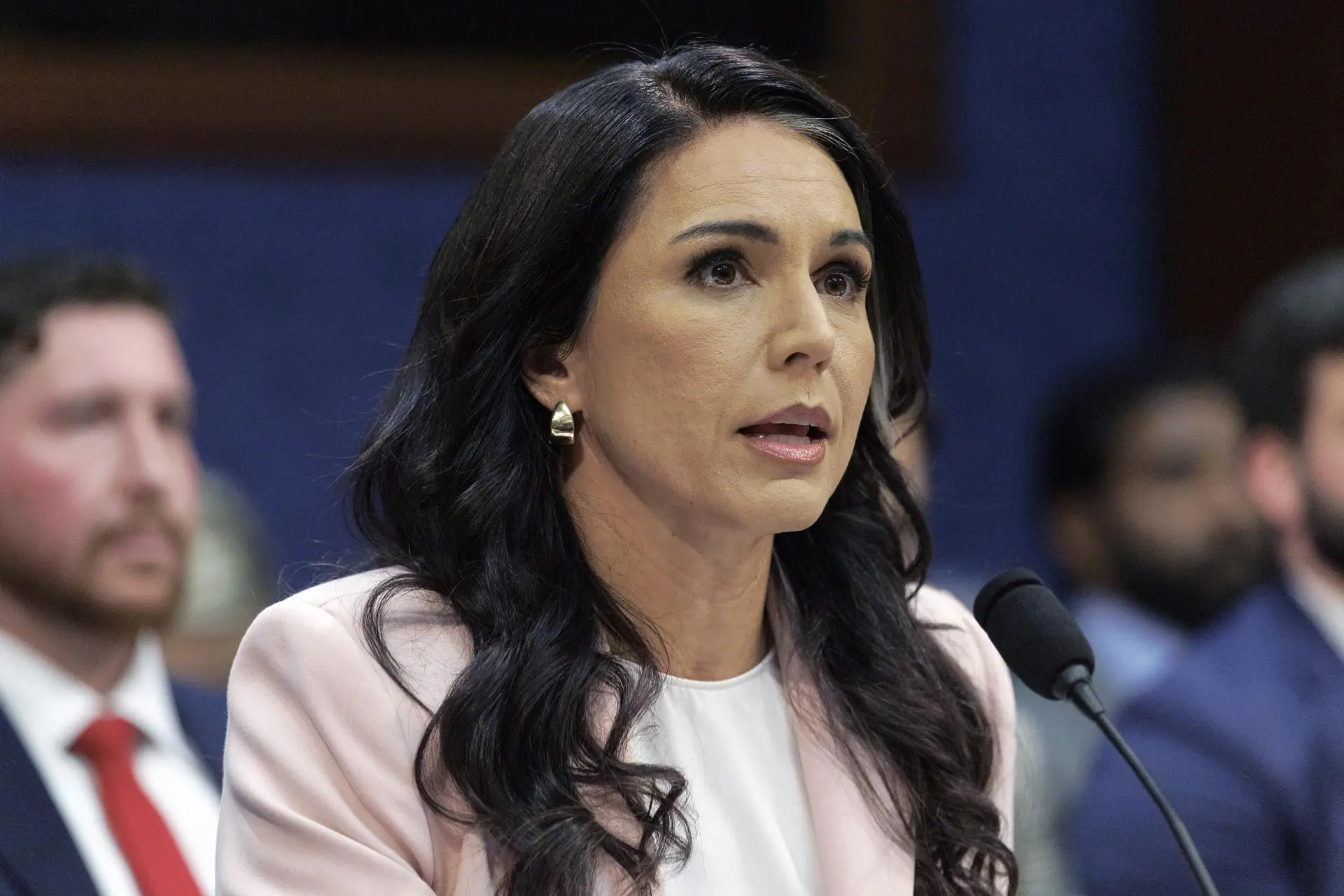
“The President will open the meeting tomorrow with a speech and, in some way, will formally preside over the start of the appointment before leaving for the state of Georgia”, said at a press conference the Administration’s Press Secretary, Karoline Leavitt.
RELATED: Norway Rejects Participating in Trump’s Peace Council for Gaza
The White House spokesperson reiterated that Trump will announce the commitment of more than $5 billion from members of the Peace Board for “humanitarian and reconstruction efforts in Gaza”, as he had already announced on the weekend in his Truth Social network.
The meeting will focus also in the release of details regarding the deployment of an international military force in the Gaza Strip.
Among the countries that have already joined the Council are the United Arab Emirates, Saudi Arabia, Egypt, Qatar, Turkey, Argentina, and Paraguay. The participation of regional Heads of State associated with the United States, such as the far right-wing Javier Milei, who has confirmed his attendance at the inaugural meeting, is expected.
Meanwhile, Israeli Prime Minister Benjamin Netanyahu reaffirmed Israel’s full membership in the Council during his official visit to Washington.
Mexico, Romania, Italy and the Czech Republic will participate as observers, as will EU Commissioner for the Mediterranean, Dubravka Suica. While several Middle Eastern nations and emerging economies have joined the organization, global powers and the United States’ European allies maintain a more cautious stance.
Criticism and International Reservations
The Council drew criticism from Human Rights experts, who consider Trump’s oversight of a body with jurisdiction over foreign territories to have a colonial character.
It was also questioned for the absence of Palestinian representatives among its members, considering that it is one of the involved parts.
Several countries responded cautiously to Trump’s invitation, fearing that the creation of this Trump’s Council could undermine the role of the UN.
Some of Washington’s allies in the Middle East joined the body, while several Western partners maintain their reservations for now.
Vatican Not Attend
The Holy See will not participate in the “initiative” promoted by the President of the United States, assured the Vatican’s top diplomat, Cardinal Pietro Parolin, on February 18.
In that regard, he explained, the Vatican “will not participate in the Peace Council due to its particular nature, as it differs, of course, from that of other States.”
According to Cardinal Parolin, efforts to manage international crises should be channeled through the United Nations. “It should be the UN that manages these international crises. This is one of the points we insist on”, he added, according to the Holy See.
Palestinian Refusal
From the Palestinian Resistance, the rejection has been categorical. In a statement, the Islamic Jihad Movement expressed its astonishment at the formation of the so-called “Peace Council” and the appointment of its members, stating that they were chosen “according to Israeli specifications and serve the interests of the occupation.”
For the organization, this constitutes “a clear indication of premeditated and negative intentions”, regarding the implementation of agreements.
Despite this, Islamic Jihad reaffirmed its adherence to the terms of the ceasefire agreement in its first phase and its willingness to move forward to the second, despite “Israeli delays, continuous daily violations, and non-compliance with the agreement.”
The U.S initiative was also criticized by the UN Special Rapporteur on the Palestinian Issues, Francesca Albanese. The official warned that Trump’s plan for Gaza is “the opposite” of a peaceful solution and represents the continuation of “ethnic cleansing under a new diplomatic guise.” Albanese described the creation of an alternative coalition to the peace council as “necessary” and emphasized that “the path to peace is to respect international law,” something which, in his opinion, has not happened.
Author: HGV - LVM
Source: Agencies